Key facts
- Justice A. R. Cornelius was Chief Justice of Pakistan from 1960 to 1968 and helped found the country’s cricket board in 1948.
- Group Captain Cecil Chaudhry flew in the 1965 and 1971 wars, won the Sitara-e-Jurat, and later led schools in Lahore and Rawalpindi.
- Dr Ruth Pfau worked against leprosy in Pakistan from 1960 and received a state funeral in Karachi in 2017.
- Joseph Cordeiro became Pakistan’s first cardinal in 1973; Joseph Coutts became the second in 2018.
- Wallis Mathias was the first Christian to play Test cricket for Pakistan.
Christians make up a small share of Pakistan’s population, as our article on the 2023 census explains. Yet Christian men and women have held some of the country’s highest offices, defended it in war, built its schools and hospitals, and played for its national teams.
This article profiles some of the best-known Pakistani Christians, using newspaper archives, Vatican records and historians’ accounts. It is written for anyone searching for Christian role models in Pakistan, and for readers abroad who want to understand the community’s place in national life.
Famous Pakistani Christians at a glance
| Name | Years | Field | Best known for |
|---|---|---|---|
| Justice A. R. Cornelius | 1903 to 1991 | Law | Chief Justice of Pakistan, 1960 to 1968 |
| Cecil Chaudhry | 1941 to 2012 | Air force, education | Sitara-e-Jurat; school principal |
| Dr Ruth Pfau | Died 2017 | Medicine | Leprosy work; state funeral |
| S.P. Singha | Died 1949 | Politics | Speaker of the Punjab Assembly |
| Joseph Cordeiro | Died 1994 | Church | Pakistan’s first cardinal, 1973 |
| Joseph Coutts | Born 1945 | Church | Archbishop of Karachi; cardinal, 2018 |
| Wallis Mathias | 1935 to 1994 | Cricket | First Christian Test player for Pakistan |
| Shahbaz Bhatti | Died 2011 | Politics | Federal Minister for Minorities |
Justice A. R. Cornelius: Pakistan’s Christian Chief Justice
Alvin Robert Cornelius was born in Agra on 1 May 1903. He joined the Indian Civil Service in 1926 and was raised to the Lahore High Court in 1946. At Partition he chose Pakistan.
In November 1951 he joined the Federal Court, which later became the Supreme Court. He served as Chief Justice of Pakistan from 1960 to 1968, and afterwards as law minister until December 1971. Lawyers still remember his dissent in the Maulvi Tamizuddin Khan case, a landmark constitutional dispute of the 1950s.
Cornelius also shaped Pakistani cricket. When the Board of Control for Cricket in Pakistan was formed on 1 May 1948, he became its vice president and drafted its constitution. As chief selector in 1951 he backed Abdul Hafeez Kardar as captain, and he pushed for the domestic Quaid-e-Azam Trophy, first played in 1953-54. The News on Sunday notes he lived simply and owned no property. He died on 21 December 1991.
Cecil Chaudhry: war hero and educator
Cecil Chaudhry was born on 27 August 1941 in Dalwal, in the Salt Range, to a Roman Catholic family. He joined the Pakistan Air Force in March 1958 and was commissioned in June 1960.
He flew combat missions in both the 1965 and 1971 wars. In 1965 he was part of the formation that attacked Halwara airfield and the Amritsar radar. He was awarded the Sitara-e-Jurat, one of Pakistan’s leading gallantry awards, and the Sitara-i-Basalat.
After leaving the air force he turned to teaching. He served as principal of St Anthony’s High School in Lahore and of St Mary’s Academy, Lalazar, in Rawalpindi, and was an alumnus of Forman Christian College. He died of lung cancer in Lahore on 13 April 2012.
Dr Ruth Pfau: the doctor who fought leprosy
Ruth Pfau was German by birth. She arrived in Pakistan in 1960, sent by the Daughters of the Heart of Mary, a Catholic religious order. She became one of the founders of the Marie Adelaide Leprosy Centre in Karachi, which grew into a national network for leprosy care.
She became a Pakistani citizen in 1988. The state honoured her with the Hilal-i-Imtiaz in 1979 and the Hilal-i-Pakistan in 1989. Dawn credits her work as central to Pakistan being declared leprosy-free by the World Health Organization in 1996.
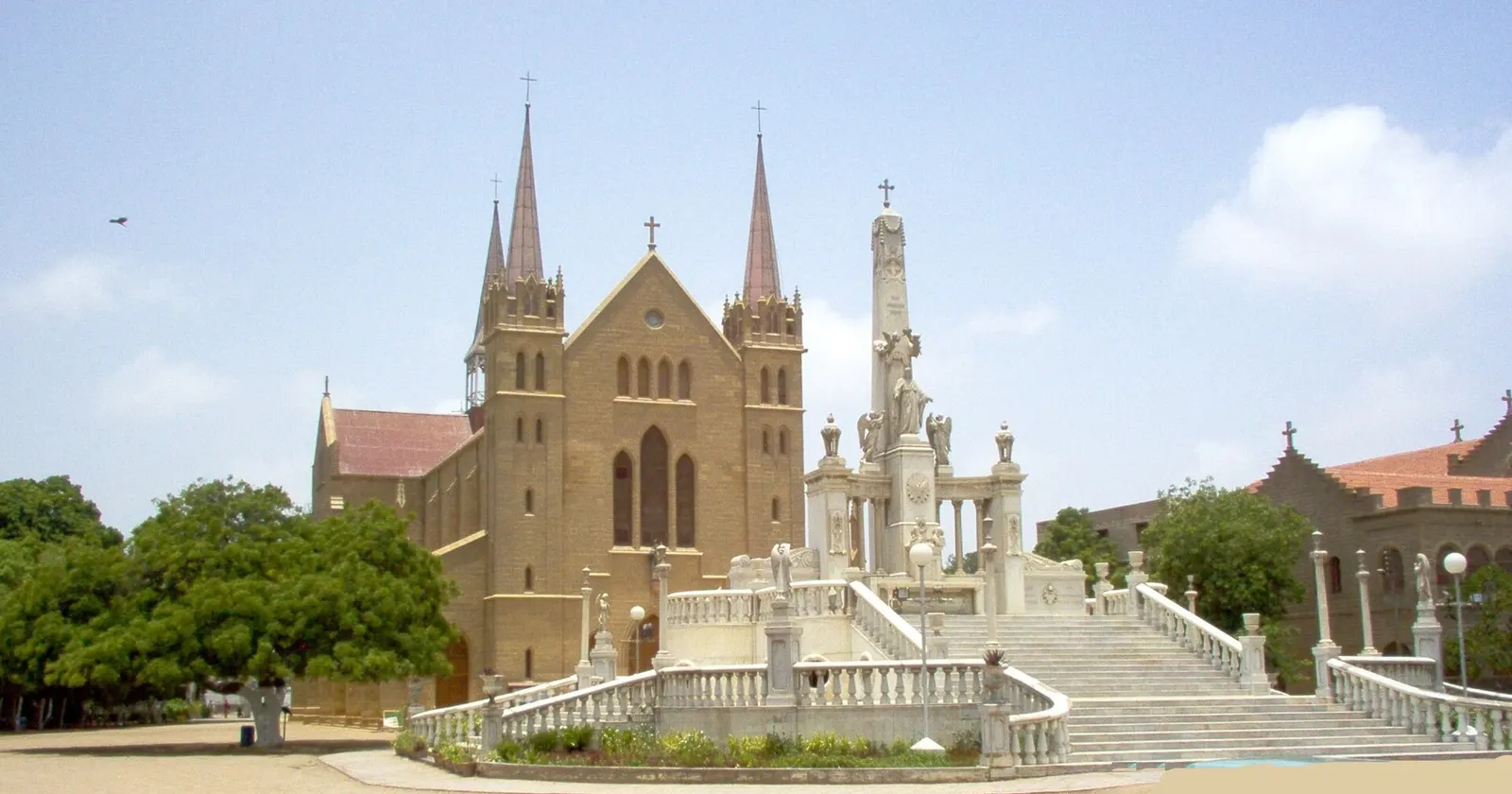
She died in August 2017. On 19 August 2017 she received a state funeral at St Patrick’s Cathedral, Karachi, attended by the President and the Army Chief. Dawn reported it was only the second state funeral in 29 years, after that of Abdul Sattar Edhi in 2016. Civil Hospital Karachi was later named after her.
S.P. Singha: the Christian Speaker of Punjab
Diwan Bahadur Satya Prakash Singha came from Pasrur, near Sialkot, and had served as Registrar of Punjab University. He was elected to the Punjab Legislative Assembly as an Indian Christian member and became its Speaker. In 2016 Pakistan Post issued a stamp in his honour.
Singha is often linked to the June 1947 Punjab Assembly vote on joining Pakistan. Popular accounts say his vote tipped the result. Historian Yaqoob Khan Bangash, writing in The News on Sunday, disputes this, saying Singha presided over the session as Speaker rather than casting a deciding vote. What both accounts agree on is that Christian leaders in Punjab supported the creation of Pakistan. Singha died in 1949.
Pakistan’s cardinals: Joseph Cordeiro and Joseph Coutts
Joseph Cordeiro, Archbishop of Karachi, became Pakistan’s first cardinal when Pope Paul VI elevated him in 1973. Dawn has described him as a great educationist. He died in 1994.
Joseph Coutts was born in Amritsar on 21 July 1945 and grew up in Karachi and Lahore. According to the Vatican Press Office, he was ordained a priest in 1971 and served as Bishop of Hyderabad from 1990 and Bishop of Faisalabad from 1998. He was Archbishop of Karachi from 2012 to 2021 and president of the Pakistan Catholic Bishops’ Conference from 2011 to 2017. Pope Francis made him a cardinal on 28 June 2018, making him Pakistan’s second. He is widely known for his work on interfaith harmony.
Wallis Mathias: the gentleman cricketer
Wallis Mathias (1935 to 1994) was born and raised in Karachi. The News on Sunday calls him the first Christian to play Test cricket for Pakistan. He played 21 Tests and scored 7,520 first-class runs at an average of 44.49, with 16 centuries.
His best-remembered Test came in Dacca in 1959, when he top-scored in both innings, with 64 and 45, as Pakistan beat the West Indies by 41 runs. He was the first captain of the National Bank of Pakistan team and later served as a national selector.
Shahbaz Bhatti: minister for minorities
Shahbaz Bhatti was Pakistan’s Federal Minister for Minorities and the only Christian in the federal cabinet at the time. He was a well-known advocate for the rights of religious minorities and was involved in recommending changes to the blasphemy law. He was shot dead in Islamabad on 2 March 2011 while travelling to a cabinet meeting.
Christian contributions to education
A striking thread runs through these lives: education. Cecil Chaudhry spent his later years as a school principal and was himself a Forman Christian College alumnus, and Dawn remembered Cardinal Cordeiro as an educationist. Christian schools and colleges have taught generations of Pakistanis of every faith. We cover the wider picture of learning in our article on the Christian literacy rate in Pakistan.
Why these stories matter today
These lives show that Pakistani Christians have led at the highest levels of law, defence, medicine, sport and faith. For young Christians in Pakistan, they are a reminder that a small community can make a national contribution. For readers abroad, they offer a fuller picture than headlines alone, alongside the challenges described in our guide to minority rights in Pakistan.
How CSIF builds the next generation
CSIF works with young Christians in Rawalpindi and Islamabad who want to build businesses and careers. Through the Future Founders Club and the Christian Youth Startup Fund, young people learn to turn ideas into ventures, with mentoring from experienced professionals. We do not claim to produce the next Cornelius or Chaudhry, but we believe the same qualities of service and skill can be nurtured today. Churches, foundations and companies who want to support this work can partner with us.