Key facts
- Pakistan’s best-known churches include Lahore Cathedral (1887), Sacred Heart Cathedral, Lahore (1907), St Patrick’s Cathedral, Karachi (1881) and Christ Church, Rawalpindi (services from 1854).
- Most of the famous historic churches were built in the 19th century, many for British military garrisons, in Gothic revival styles.
- All Saints Church, Peshawar (1883) was designed to look like a mosque, with a dome and minarets.
- These buildings are still active places of worship, used every week by Catholic and Church of Pakistan congregations.
Pakistan is not usually the first country people think of when they picture grand cathedrals. Yet its cities hold some of the finest church buildings in South Asia, from Gothic sandstone on The Mall in Lahore to a hill-station chapel in Murree. They are heritage landmarks, and they are also living churches where Pakistani Christians gather every Sunday.
This guide covers eight of the most famous churches in Pakistan, listed by city, with the key dates and facts that visitors, researchers and church partners most often look for.
Famous churches in Pakistan at a glance
| Church | City | Tradition | Built or consecrated |
|---|---|---|---|
| Holy Trinity Church | Murree | Built for British troops | First brick 1850, services from 1857 |
| Christ Church | Rawalpindi | Church of Pakistan | Foundation 1852, services from 1854 |
| Holy Trinity Cathedral | Karachi | Anglican garrison church | Consecrated 1855 |
| St Andrew’s Church | Karachi | Scottish church | 1868 |
| St Patrick’s Cathedral | Karachi | Roman Catholic | 1881 |
| All Saints Church | Peshawar | Church Missionary Society foundation | Opened 1883 |
| Cathedral Church of the Resurrection | Lahore | Church of Pakistan | Consecrated 1887 |
| Sacred Heart Cathedral | Lahore | Roman Catholic | Consecrated 1907 |
Lahore Cathedral (Cathedral Church of the Resurrection)
The Cathedral Church of the Resurrection, usually called Lahore Cathedral, stands on The Mall opposite the Lahore High Court. It is the seat of the Bishop of Lahore in the Church of Pakistan.
According to the Gilbert Scott Archive, the cathedral was designed by John Oldrid Scott, son of the Victorian architect George Gilbert Scott, and consecrated on 25 January 1887. It is built of pink sandstone in a neo-Gothic style on a cross-shaped plan. CNN, in a feature on church architecture in Pakistan, describes the style as Early English Gothic revival and quotes the writer Jan Morris calling it “the greatest shrine to the Raj in its heroic age”.
For many visitors, its tall arches and stone tracery make it the most recognisable church in the country.
Sacred Heart Cathedral, Lahore
A short distance away is the Roman Catholic Sacred Heart Cathedral, the cathedral of the Archdiocese of Lahore. GCatholic records that it was consecrated on 19 November 1907.
CNN notes that it was designed by the Belgian architect Edouard Dobbeleers in a Roman Byzantine style, with a large dome and a bell tower around 165 feet high. Its dome sets it apart from the Gothic spires of most colonial-era churches, and it remains the heart of Catholic life in Lahore.
St Patrick’s Cathedral, Karachi
St Patrick’s Cathedral is Karachi’s best-known church and, according to Dawn, the largest church in the city. It was built in 1881 to designs by three Jesuits, Father Wagner, Brother Kluver and Brother Lau, using local Gizri stone. Dawn reports that the nave measures about 170 by 75 feet and can hold around 1,500 worshippers.
CNN describes it as High Gothic in style and notes that it stands on the site of an earlier chapel built for Irish Catholic soldiers. Its midnight Mass at Christmas is one of the largest gatherings of Karachi’s Christian year.
Holy Trinity Cathedral, Karachi
Holy Trinity Cathedral was consecrated in 1855 as a garrison church, according to CNN. Its tower was once five storeys high, but two levels were removed in 1904 because the upper floors shook in strong winds. The shortened tower is still a familiar landmark.
St Andrew’s Church, Karachi
Built in 1868, St Andrew’s Church was founded for Karachi’s Scottish community, CNN reports. It is one of several 19th-century churches that give Karachi’s older districts their distinctive mix of Victorian architecture.
Christ Church, Rawalpindi
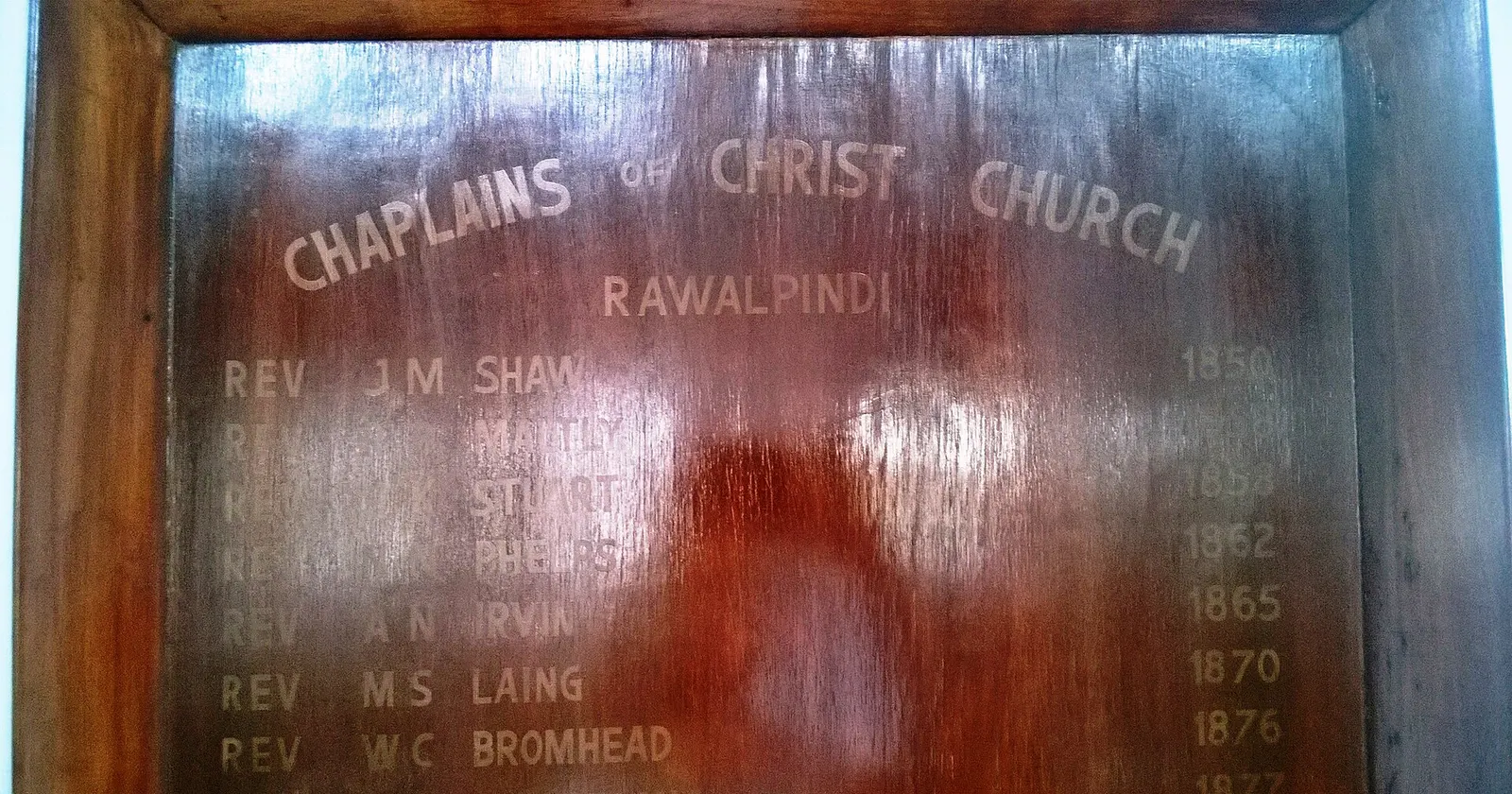
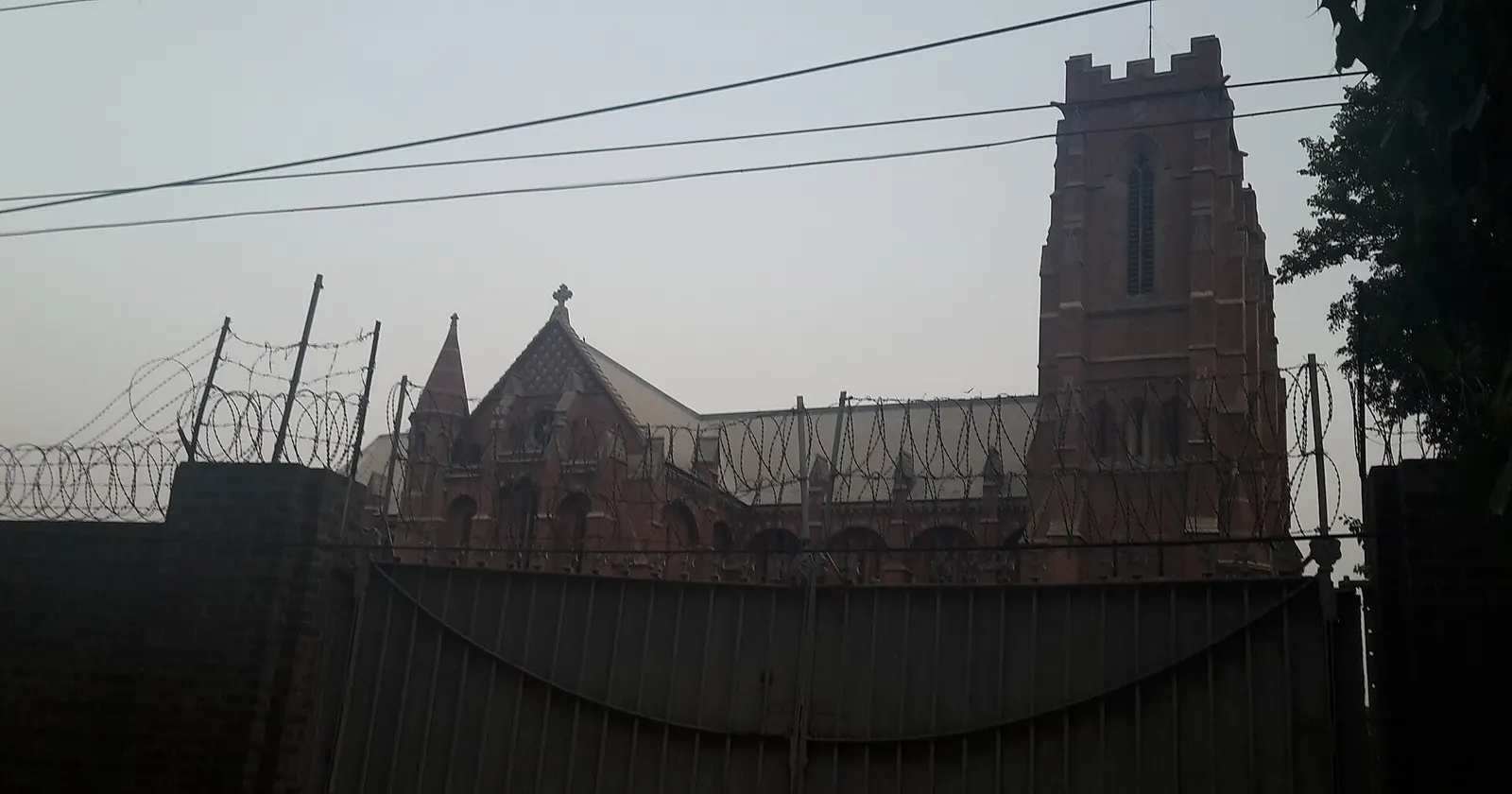
Christ Church is one of the oldest churches in northern Pakistan. Dawn reports that its foundation stone was laid in 1852 and that services began in 1854. It was built for British Army officers after the decision in 1851 to station troops permanently in Rawalpindi.
The church has a cruciform plan with colonial Gothic features and seats more than 800 people. Dawn notes that its wooden roof, altar, lectern and pulpit are original and were carved by Kashmiri craftsmen. One unusual detail is a mean sea level benchmark stone that is still used by the Survey of Pakistan. The church belongs to the Lahore Diocese of the Church of Pakistan and has been the focus of recent conservation work.
For CSIF, which works in Rawalpindi and Islamabad, Christ Church is part of the local Christian landscape we serve.
All Saints Church, Peshawar
All Saints Church in Peshawar is one of the most unusual church buildings in the region. The Express Tribune reports that work began in August 1882 and the church opened on 27 December 1883, on land bought by Rev. Thomas Patrick Hughes of the Church Missionary Society.
It was designed to look like a mosque, with a dome and minaret-style towers. Bible verses inside are written in Persian and Pashto. The church suffered a suicide bombing in 2013 in which, the Express Tribune reported, at least 78 worshippers were killed. The congregation has continued to worship there.
Holy Trinity Church, Murree
In the hill town of Murree, Holy Trinity Church was one of the first buildings on The Mall. Dawn reports that its first brick was laid on 2 March 1850 and that its bell first rang on 17 May 1857, when services began for the British Northern Command.
The church has stained glass windows, Kashmiri wood carving and what Dawn describes as the oldest library in Murree. It remains the main church in the town.
What makes Pakistan’s historic churches special
A few themes run through these buildings:
- Colonial origins. Most were built between 1850 and 1910 for British soldiers, officials and missionaries, which is why so many sit in cantonments and on main roads called The Mall.
- Local craftsmanship. Builders used regional materials such as Gizri stone and pink sandstone, and Kashmiri carpenters carved much of the woodwork.
- Mixed styles. Gothic revival dominates, but Sacred Heart’s dome and All Saints’ mosque-like design show architects adapting to local settings.
- Living congregations. These are not museums. Pakistani Catholic and Church of Pakistan congregations use them for weekly worship, weddings and festivals.
For readers who want to understand the community that fills these pews, our guide to the Christian population in Pakistan explains how many Christians live in each province.
Visiting famous churches in Pakistan
Most historic churches are open to respectful visitors, but it is wise to contact the church office first, avoid service times unless attending worship, dress modestly and expect security checks at the gate. Photography rules differ from church to church, so ask before taking pictures inside.
How CSIF works with churches today
Historic buildings are only one part of church life in Pakistan. Most congregations are small and run on limited budgets, and many pastors are now looking for ways to use digital tools to reach young people and run their churches well. CSIF’s Church Tech Enablement Program helps pastors and church leaders in Rawalpindi and Islamabad adopt practical digital and AI skills. Churches abroad that want to build a partnership with churches in Pakistan can partner with us.